
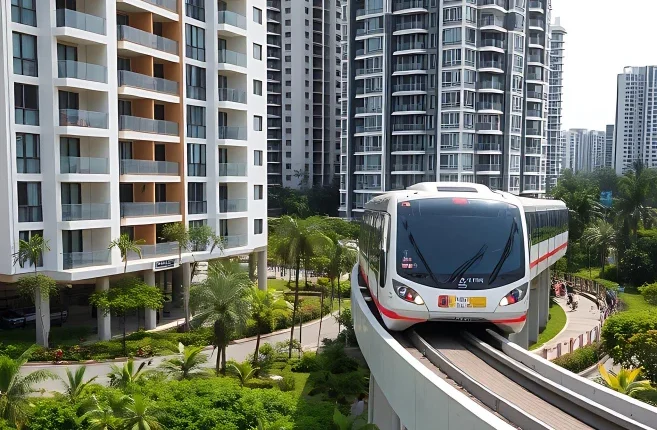
If you ask long-time Mumbai residents what changed the most over the past decade, many won’t start by mentioning skyscrapers or shopping malls. Many will discuss travelling across the city. A journey that once felt tiring has become far more manageable in many areas, thanks to the expanding metro network.
That change has quietly influenced home buying decisions too.
People still compare floor plans, amenities, and budgets. Yet another question now comes up almost every time someone visits a project. How easy is the daily commute?
For buyers exploring Vile Parle real estate, the answer has become more encouraging than ever. The neighbourhood already had a strong reputation. Metro connectivity has simply added another reason for families and investors to look at it with fresh interest.
The Growing Importance of Metro Connectivity in Mumbai Real Estate
Anyone who has spent years travelling through Mumbai knows that distance can be misleading. Two places may appear close on a map, yet reaching one from the other can take much longer than expected.
That is why transport is a key factor when choosing a home.
Earlier, many buyers focused mainly on railway stations because local trains formed the backbone of daily travel. That hasn’t changed completely, but the metro has introduced another dependable option. People now have greater flexibility, especially during busy working days.
Interestingly, conversations with property consultants have also changed. Earlier, buyers mostly discussed carpet area or parking. Now they often ask how long it takes to reach nearby metro stations. That simple question says a lot about changing priorities.
Reliable Mumbai Metro connectivity doesn’t just make commuting easier. It changes the way people think about where they can comfortably live.
How Metro Access Is Improving Connectivity for Vile Parle Residents
Walk through Vile Parle on any weekday morning, and you’ll notice something familiar. Students head towards colleges, office-goers move quickly towards transport hubs, shopkeepers prepare for the day, and cafés slowly begin filling up. It has always been an active neighbourhood.
The difference today is that residents have more than one practical way to travel.
Some still prefer the suburban railway. Others combine trains and the metro depending on where they need to go. Many switch between public transport and road travel without feeling tied to a single route.
That flexibility matters more than people sometimes realise. This practical advantage has strengthened demand for property in Vile Parle.
Impact of Metro Connectivity on Property Values in Vile Parle
People often assume property prices move only because of demand. Demand certainly plays a part, but it is rarely the whole story. Subtle shifts in a neighbourhood can gradually influence how buyers perceive it.
Better transport is one of those changes.
Think about two similar homes. They may offer almost the same layout, similar amenities, and nearly identical living space. If one allows residents to reach important parts of Mumbai more easily, buyers usually notice the difference before anything else.
That is exactly why transport links often become part of property discussions.
In Vile Parle, metro connectivity has added to an area that was already well established. The metro did not create the neighbourhood. Instead, it made an existing location feel even more connected.
Many buyers watching property prices in Vile Parle understand this point. They are not expecting dramatic overnight gains. They are usually looking for a home in a place that has shown steady demand over many years.
Why Homebuyers Prefer Residential Projects Near Metro Stations
Every buyer has a different reason for choosing a neighbourhood.
A young professional may think about reaching the office without spending half the morning in traffic. Parents might picture school runs and evening activities. Older buyers sometimes look for places where hospitals, markets, and public transport remain close together.
Different needs often lead people to the same conclusion.
Homes with better transport options usually fit everyday life more comfortably.
That explains why residential projects in Vile Parle continue attracting attention from a wide mix of buyers. Some plan to move in immediately. Others are buying with the next ten or fifteen years in mind.
There is another practical advantage that rarely appears in advertisements. Daily routines become easier when travel feels predictable. Missing one train or taking a different metro route does not completely disrupt the day. Having choices gives residents flexibility, and flexibility is something busy families appreciate.
Rental demand reflects similar thinking.
Tenants often compare locations based on commuting time before comparing facilities. A gym or clubhouse is attractive, but reaching work without unnecessary delays usually carries more weight.
That is one reason flats in Vile Parle continue appealing to both end users and investors. The neighbourhood serves different age groups without feeling limited to one type of buyer.
Future Growth Prospects for Vile Parle Real Estate with Metro Expansion
Nobody can predict exactly how any property market will behave over the next decade. Even experienced investors avoid making definitive claims.
What people can observe is how neighbourhoods respond when infrastructure keeps improving.
Looking at Vile Parle real estate, the appeal goes beyond individual buildings. Buyers are investing in a neighbourhood with a long history, reliable infrastructure, and transport options that continue improving.
Perhaps that explains why people rarely describe Vile Parle as a passing trend. It has changed over the years, but it has never lost its place among Mumbai’s preferred residential locations.
The metro has added another chapter to that story. It has not changed the identity of the neighbourhood. Instead, it has made an already established location even more practical for modern city life.
For anyone considering property in Vile Parle, everyday convenience can be just as valuable as the home itself. When a neighbourhood combines strong connectivity, established infrastructure, and steady demand, it remains a place that buyers continue to trust for the long term.